Freedom fighters the world tried to forget
Freedom fighters the world tried to forget
12:09, 19.09.2007
5 min.
4220To many Ukrainians, the guerrillas were just what their communist rulers once called them: fascist collaborators, bandits and war criminals. To the rest of the world, they were all but unknown.
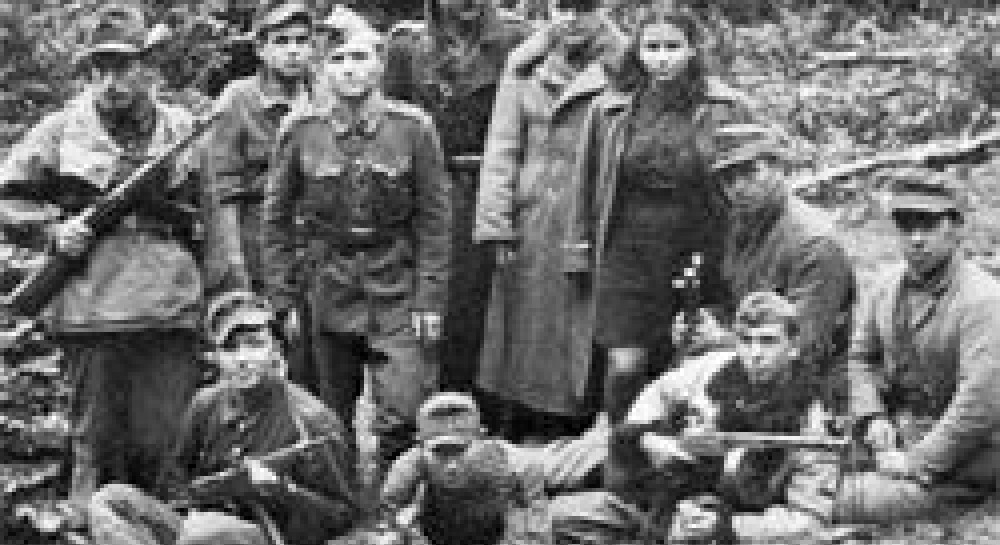
Clearing rubble in her farmyard, high in the Carpathian Mountains of western Ukraine, Hanna Kishchuk hit something hard with her hoe. She had snagged two glass jars. The contents of one were decayed, but the other held 216 photo negatives.
Peering at the images, which showed men and some women in uniform, Hanna`s son, Petro, caught sight of a familiar insignia, the Ukrainian tryzub or trident, which he knew from stories he had heard as a child was the insignia of the Ukrainska Povstanska Armiia (UPA), the fabled Ukrainian insurgent army.
The Kishchuks knew their farm once belonged to a man who disappeared after the Soviets discovered he was a Ukrainian nationalist and whose wife was later deported never to return. Could these be long-lost photos of the shadowy guerrilla force that fought for national independence until it was wiped out more than 50 years ago?
Видео дня
Thousands of mourners paid their final respects to the UPA`s last commander, Vasyl Kuk, who died on Sept 9 at the age of 94. Mr. Kuk, who was captured in 1954, sentenced to death and jailed for years before being released, was described by President Viktor Yushchenko on Tuesday as the "personification of the Ukrainian idea."
Such official praise is a relatively recent development, considering that not so long ago the mere mention of the rebellious UPA was a major faux pas in a land emerging from decades behind the Iron Curtain.
To many Ukrainians, the guerrillas were just what their communist rulers once called them: fascist collaborators, bandits and war criminals. To the rest of the world, they were all but unknown.
But Petro Kishchuk had grown up hearing the other side of the story - how the UPA had fought the Nazi invaders and then the Soviets; how, at its height, it may have had 100,000 people bearing arms.
Honeycombing the countryside with bunkers, many of them still in place, the partisans became so adept at guerilla warfare that Soviet military instructors reportedly taught their North Vietnamese allies both UPA`s techniques and the methods they had used to liquidate them. Many of those anti-insurgent tactics are still used in Iraq and Chechnya.
It turned out that the photos in the jars unearthed by Petro`s mother were of UPA Company No. 67, which operated along the border of Ukraine and Romania. Finding them 50 years later was remarkable, but perhaps even more surprising was the fact the pictures were taken in the first place. UPA regulations generally prohibited photography - clearly the soldiers and their civilian supporters faced grave risk should their likenesses be captured.
Why were the rules broken? No one knows, but it seems certain that those who buried the jars knew their struggle was drawing to an end and wanted to preserve evidence of who they were and what they were fighting for.
Most of the people in these photographs died in combat or were missing in action. Anyone captured was interrogated and then either executed or exiled to the Soviet gulag. Those fortunate enough to survive internment were prohibited from returning home or speaking about their insurgent experiences, at least until the Soviet Union`s collapse.
Their story begins in September, 1939, with the violent dismemberment of Poland by Nazi Germany, assisted by the Soviet Union. Western Ukraine had been in Polish hands, but was incorporated into the Ukrainian Soviet Socialist Republic through a staged plebiscite, even as a relentless persecution of anyone - Ukrainian, Pole or Jew - considered an enemy of the Stalinist regime was launched. Deportations and mass murder continued until Adolf Hitler turned against his Soviet ally on June 22, 1941.
To the Nazis, most Ukrainians were Untermenschen (subhumans) and their country a future Lebensraum (living space) for an Aryan master race. They herded Ukrainian patriots into concentration camps, despoiled the country`s resources and press-ganged millions into slave labour in the Third Reich. Ukraine suffered greater civilian losses than any other nation in Nazi-occupied Europe, a fact obfuscated by those who still refer to "20 million Soviet war dead," or even more disingenuously, to "20 million Russians" lost in a "Great Patriotic War."
By October, 1942, the UPA had emerged as a national liberation army. After the war, its armed struggle would be reduced, finally, but only after the Soviet secret police and collaborators had brutally depopulated western Ukraine, destroying the insurgents` civilian support networks, and hunted down the last fighters, a campaign that lasted more than a decade.
A study by Jeffrey Burds, a professor of Soviet history at Northeastern University, underscores the intensity of the battle for Ukraine after the Germans had been defeated. From February, 1944, to May, 1946, Soviet troops killed 110,825 UPA "bandits" and captured 250,676 more. As late as February, 1947, UPA "remnants" were still holding off nearly 70,000 crack troops.
The fighting took place in an area slightly larger than New Brunswick and the nationalists suffered a heavy blow on March 5, 1950, when Mr. Kuk`s mentor and predecessor as commander, General Roman Shukhevych, was killed.
Whether the UPA stood any chance of success is debatable. Certainly, its soldiers believed they would prevail - their oath was "Attain a Ukrainian state or die in battle for it." And Soviet imperialism, they hoped, would be contained, even rolled back, by the West. But they got no significant outside help. Indeed, they were betrayed by British traitors like Kim Philby, who alerted his Soviet masters to what few American and British efforts were made to aid the Ukrainian insurgency.
Eventually those who survived the years of armed struggle were ordered to demobilize, go back to civilian life and remain in deep cover. There they suffered a further indignity - hearing others speak well of their struggle for Ukraine`s independence, but only out of earshot of the regime`s men
Today, 16 years after Ukraine re-emerged from the Soviet Union, the image of the UPA remains contested. People who served in the state by ferreting out nationalists receive pensions, but no such benefits are accorded their prey. Just as UPA veterans such as Mr. Kuk strived to overcome the lingering propaganda, there are still those who continue to recite it, because it masks their own complicity.
This situation will not last. For more than a decade, ordinary Ukrainians have taken it upon themselves to honour their partisans.
Those best placed to know what the UPA represented - family members, neighbours and descendents - have erected dozens of memorials across the country to those who resisted foreign occupation.
And stories continue to be told about UPA heroes like one of the men in these pictures.
Khmara (Cloud) was the nom de guerre of Company 67`s leader, Dmytro Bilinchuk, who took up arms in 1941 after the Soviets deported his family to Siberia. He stayed underground when the Germans invaded and was captured by the Gestapo the following year. However, he was soon rescued while being transported to a prison in Kolomyia and returned to the forests for 10 more years on the run.
Finally, in 1952, he was betrayed and again taken prisoner. After being interrogated in the infamous Lukianivka prison, he was shot on June 24, 1953. It was 46 years to the day later that Hanna Kishchuk hit something with her hoe.
Khmara`s executioners probably thought they could erase the memory of the Ukrainian liberation movement from the annals of history. By consigning their images to the soil they were fighting for, the members of Company No. 67 proved them wrong.
---------------------------------------------------------------------------------------------
Lubomyr Luciuk is a professor of geography at the Royal Military College of Canada. This article is adapted from Their Just War: Images of the Ukrainian Insurgent Army (Kashtan Press, 2007), co-written with Vasyl Humeniuk.
This article was monitored by the Action Ukraine Monitoring Service for the Action Ukraine Report (AUR), Morgan Williams, SigmaBleyzer, Editor.
By Lubomyr Luciuk, The Glove and Mail,
Toronto, Ontario, Canada, September 15, 2007
Partner news