Ukrainian highlanders: Hutsuls, Boikos, and Lemkos
Ukrainian highlanders: Hutsuls, Boikos, and Lemkos
12:57, 04.09.2007
4 min.
Distinguished by their unique dialects and folklore traditions, the Ukrainian highlanders in the eastern Carpathian Mountains are divided into several ethnographic groups: the Lemkos, the Boikos, and the Hutsuls...
Distinguished by their unique dialects and folklore traditions, the Ukrainian highlanders in the eastern Carpathian Mountains are divided into several ethnographic groups: the Lemkos, in the Low Beskyd and the western part of the Middle Beskyd; the Boikos, up to the Bystrytsia Solotvynska River; and the Hutsuls in the Hutsul region further east.
The central part of Transcarpathia is settled by the Zahoriany (tramontanes) or Dolyniany (lowlanders), who are related to the Boikos and speak a central Transcarpathian dialect.
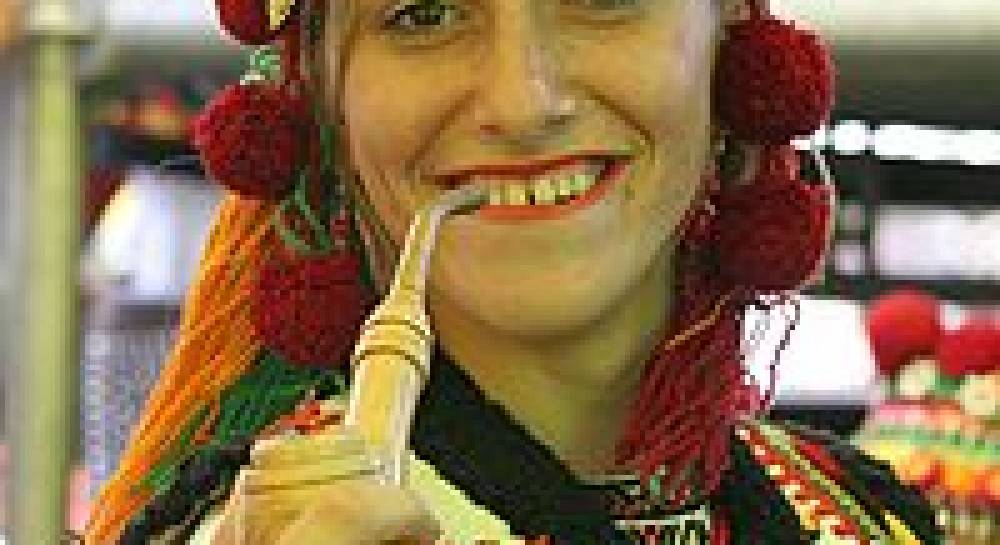
The Hutsuls are renouned for their colorful, richly ornamented folk dress and their handicrafts, such as artistic wood carving, ceramics, handmade jewelry, vibrant handwoven textiles, embroidery, and distinctive wooden folk architecture.
Видео дня
Engaged primarily in animal husbandry and agriculture, the Boikos have preserved many ancient folk customs and rites that have disappeared in other parts of Ukraine.
The Lemkos are a distinct ethnic group within the Ukrainian nation. Their dialects and spiritual and material culture preserved some unique archaic elements that have been lost by other Ukrainians. Almost all Lemkos were resettled from their native territory to the USSR (in 1944-45) and western Poland (in 1947).
HUTSULS. An ethnographic group of Ukrainian pastoral highlanders inhabiting the Hutsul region in the Carpathian Mountains. According to one theory, the name hutsul was originally kochul (`nomad,` cf literary Ukrainian kochovyk) and referred to inhabitants of Kyivan Rus` who fled from the Mongol invasion into the Carpathian Mountains.
Other scholars believed that the name derives from a subtribe of the Cumans or Pechenegs-the ancient Turkic Utsians or Uzians-who fled from the Mongols. Since the 19th century the most widely accepted view has been that the name comes from the Rumanian word for brigand, hotul/hot.
Archeological evidence of human existence in the region dates back 100,000 years. Certain localities (eg, Kosiv) were settled as early as the Neolithic Period (6,000-4,000 BC). The Slavic White Croatians inhabited the region in the first millennium AD; with the rise of Kyivan Rus`, they became vassals of the new state.
References to salt mines in the region are found in the Galician-Volhynian Chronicle, and the earliest recorded mention of a settlement there (1367) is that of the salt-mining center of Utoropy. Many other Hutsul settlements and monasteries are mentioned in charters and municipal and land documents beginning in the 15th century...
HUTSUL REGION (Hutsulshchyna). A region in the southeasternmost part of the Carpathian Mountains of Galicia, Bukovyna, and Transcarpathia (the basins of the upper Prut River, upper Suceava River, upper Bystrytsia Nadvirnianska River, and upper Tysa River valleys), inhabited by Ukrainian highlanders called Hutsuls. Except for eight settlements in Romania, the Hutsul region lies within the present-day borders of the Ukraine.
In the southeast the Hutsul region borders on ethnic Romanian lands; in the west, on the region of the Boikos; in the north, on the region of the Subcarpathian Pidhiriany; and in the southwest, on long-cultivated Transcarpathian Ukrainian lands.
The region is located in the most elevated and picturesque part of the Ukrainian Carpathians. The gently sloping mountains are densely populated, and the land there is cultivated to a considerable height owing to the moderating climatic influence of the Black Sea and the massiveness of the ranges, which make summers in the region warmer than in other parts of the Carpathians. Highland pastures (polonyny) are widespread, and herding, particularly of sheep, has traditionally been widely practiced.
BOIKOS. A tribe or ethnographic group of Ukrainian highlanders who inhabit both slopes of the middle Carpathian Mountains, now in Lviv oblast, Ivano-Frankivske oblast, and Transcarpathia oblast. The name boiko is thought to be derived from the frequent use of the particle boiie by the population.
The Boikos are believed to be the descendants of the ancient Slavic tribe of White Croatians that came under the rule of the Kyivan Rus` state during the reign of Grand Prince Volodymyr the Great. Before the Magyars occupied the Danube Lowland this tribe served as a direct link between the Eastern and Southern Slavs.
The Boiko region occupies all of the High Beskyd, the eastern part of the Middle Beskyd, the western part of the Gorgany Mountains, and the Middle Carpathian Depression south of these mountains. In the north the limits of the Boiko region coincide with the borderline of the Carpathians; in the south the region borders on the Middle Carpathian territory, inhabited by the lowlanders (dolyniaky), whose dialect is considered the archaic Boiko tongue.
In the west the Boiko population extends as far as the Solynka River, which is a tributary of the Sian River and marks the border with the Lemkos, and in the east it extends to the Limnytsia River valley.
LEMKOS. A Ukrainian ethnic group which until 1946 lived in the most western part of Ukraine on both sides of the Carpathian Mountains and along the Polish-Slovak border. The name seems to be derived from the frequent use of the word lem `only` by the Lemkos. They usually call themselves rusnaky or rusyny (Ruthenians). Scholars and the intelligentsia began to use the name Lemko for the western groups of Ukrainian highlanders in the mid-19th century, and by the end of the century some Lemkos had accepted the name.
It is not used widely in the Presov region of Slovakia. The intrinsic conservatism of the Lemkos preserved them from Polonization but at the same time impeded the rise of Ukrainian national consciousness. The Old Ruthenian cultural mainstream, led mostly by local priests, turned in a
Russophile direction in the 1900s and received support from the Russian tsarist government. The Ukrainian national movement gained strength among the Lemkos only toward the end of the 19th century and was centered in Nowy Sacz and Sianik...
LEMKO REGION (Lemkivshchyna). The territory traditionally inhabited by the Lemkos forms an ethnographic peninsula 140 km long and 25-50 km wide within Polish and Slovak territory. After the deportation of Lemkos from the northern part in 1946, only the southern part, southwest of the Carpathian Mountains, known as the Presov region in Slovakia, has remained inhabited by Lemkos.
The Lemko region occupies the lowest part of the Ukrainian Carpathian Mountains-most of the Low Beskyd, the western part of the Middle Beskyd, and the eastern fringe of the Western Beskyd. The landscape is typical of medium-height-mountain terrain, with ridges reaching 1,000 m and sometimes 1,300 m. Only small parts of southern Low Beskyd and the northern Sian region have a low-mountain landscape. A series of mountain passes along the Torysa River and Poprad River-Tylych Pass (688 m), Duklia Pass (502 m), and Lupkiv Pass (657 m)-facilitate communications between Galician and Transcarpathian Lemkos.
By Dr. Marko R. Stech, Managing Director, CIUS Press
Project Manager, Internet Encyclopedia of UkraineProject Manager, Hrushevsky Translation Project
Canadian Institute of Ukrainian Studies, University of Toronto
This article was monitored by the Action Ukraine Monitoring Service for the Action Ukraine Report (AUR), Morgan Williams, SigmaBleyzer, Editor.